Torrance Breaks Ground on Its WWII Camp Wall in a Park a Camp Survivor Designed
November 12, 2026
November 12, 2026
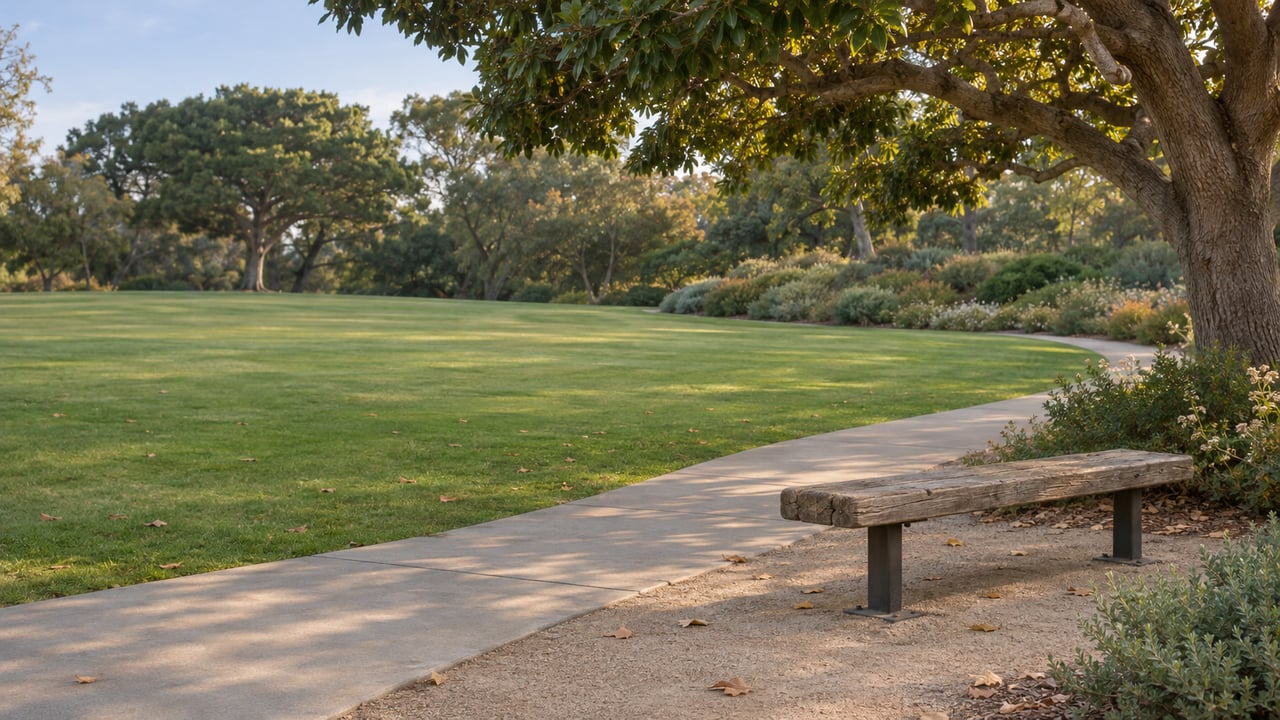
One December 27, a landscape architect named Paul Saito walked through Columbia Park in Torrance for the first time in more than 35 years. He had redesigned the 52-acre park in 1984, and members of the WWII Camp Wall Committee had met him there to see the spot they hoped to use for a memorial. According to Rafu Shimpo, which reported the visit in January 2022, his reaction was simple: "It's much bigger than I remember it."
Saito had been sent to the Santa Anita Assembly Center under Executive Order 9066 and then to the Rohwer War Relocation Center in Arkansas. Dr. Kanji Sahara, the longtime Torrance resident who first imagined the memorial, was held as a child at Santa Anita and later at Jerome and Rohwer in Arkansas. The monument that breaks ground on Monday, November 23, goes into a park shaped by a man who passed through two of the same camps.
Sahara was a Ph.D. engineer and a Japanese American community activist. He died on February 15, 2025. His idea grew out of an earlier effort to honor people held at Tuna Canyon. When that group couldn't get the land, he expanded the plan to walls for the camps themselves and looked for a site in Torrance. He took the proposal to the Greater Los Angeles JACL at a meeting in Gardena. The residents who backed him formed WWII Camp Wall, which incorporated as a 501(c)(3) nonprofit in 2023.
Saito's career kept coming back to the same history. After Columbia Park he settled in Fresno, where he designed the Shinzen Friendship Garden, the Fresno Assembly Center Memorial at the Fresno Fairgrounds and Remembrance Plaza at the Pinedale Assembly Center. His Columbia Park work won an achievement award from the California Landscape Contractors Association in 1985.
Japanese American history was in the park well before the wall. The city's Columbia Park page lists a cherry tree grove and a sculpture called "Fujimahara," along with the community garden, amphitheater, gazebo and walking paths. The trees began arriving in 2012, when Soka Gakkai International gave 20 cherry trees to Torrance, the same year the Cherry Blossom Cultural Festival started. By 2022, Rafu Shimpo reported that the organization had donated more than 150 trees to the city, about 100 of them planted in Columbia Park.
That history runs through Torrance's neighborhoods too. In oral histories gathered by the South Bay JACL, Midori Kamei remembers growing up in North Torrance, where her parents farmed, and being held with her family at Santa Anita and Heart Mountain. The collection is hosted by the Japanese Cultural Institute in Gardena and is worth reading before the ceremony.
The city gave the design contract to the firm Chee Salette on December 17, 2024, and the City Council approved the schematic design on April 22, 2025. Here's the plan as the city and WWII Camp Wall describe it:
The council approved Columbia Park as the site on April 25, 2023. One reason, the Daily Breeze reported, was that its location near major roads would make the memorial easy to reach.
The project spent years waiting for money. It first came to Torrance officials in 2019 and stalled while the city looked for funding. Then construction pricing outran the budget. Here is how the numbers moved, based on the city's September 15, 2026 staff report and later coverage:
| Date | What happened | Budget picture |
|---|---|---|
| 2021 | Assemblymember Al Muratsuchi secures a state grant | $5 million |
| April 2025 | Schematic design approved | Estimated at about $10 million |
| FY 2025-26 budget | Council adds General Fund money | $10 million total |
| June 25, 2026 | Four construction bids open | All about $7.1 to $8.0 million over budget |
| Sept. 15, 2026 | Council votes unanimously to proceed as designed | Nearly $20 million total |
Staff blamed the custom granite walls, specialty stone paving, site infrastructure and market conditions for the overrun. The council had three options on the table. It could add the money, cut the scope and rebid, or start over. Speakers urged the council to keep going, including Muratsuchi and Sahara's granddaughter, Nicole Tang. The Daily Breeze quoted her:
"My grandfather really looked forward to the day he could find and touch his name on the World War II camp wall. It is too late for him, but my hope is that the project will be finished in time for other survivors to find and touch their own names."
The council voted unanimously to commit the extra $8 million while still looking for outside money to repay the city's budget. The same article quotes Mayor Sharon Kalani: "I am very concerned that if we go down any other path, we will not see it happen, and I am determined to see it happen."
The vote gave staff direction. It didn't award the construction contract. Staff will bring the recommended contract, the final funding amount and the appropriation request back to the council. The council also approved asking the state to extend the grant deadline to February 1, 2029, and adopted a donation and donor-recognition policy. The city's November 6 announcement gives fall 2028 as its target for completion and says Torrance is working to raise another $15 million.
That explains why the groundbreaking is going ahead now, with the fundraising still underway. The council decided that waiting for outside money would cost more time than the survivors have, so the city is paying first and collecting later.
The ceremony is 11 days after this post goes up. Here's how to take part:
WWII Camp Wall says it is building an education program to go with the monument. The nonprofit's president, Nancy Hayata, told Rafu Shimpo that the Tuna Canyon Detention Station Coalition and WWII Camp Wall have guided the project since 2019. In its January 2022 report on Saito's visit, Rafu Shimpo wrote that the committee hoped to bring the project "full-circle" for him. On November 23, construction starts in the park he redesigned in 1984.
I'll be following the Camp Wall as it moves from groundbreaking to contract award to finished granite, and I'll share updates as the city posts them. If you have questions about Torrance, or about anything else in the South Bay, Vertice Williams is always glad to talk. Let's Make Your Move Happen.
Stay up to date on the latest real estate trends.
As a trusted South Bay real estate expert, Vertice Williams is dedicated to helping buyers, sellers, and investors navigate every step of the process with confidence.
VERTICE WILLIAMS | CA DRE# 01938199
[email protected]
(310) 751-0327
CARMODY REAL ESTATE, INC. | CA DRE# 02283642
2450 Colorado Ave Ste 100 E Santa Monica CA 90404